

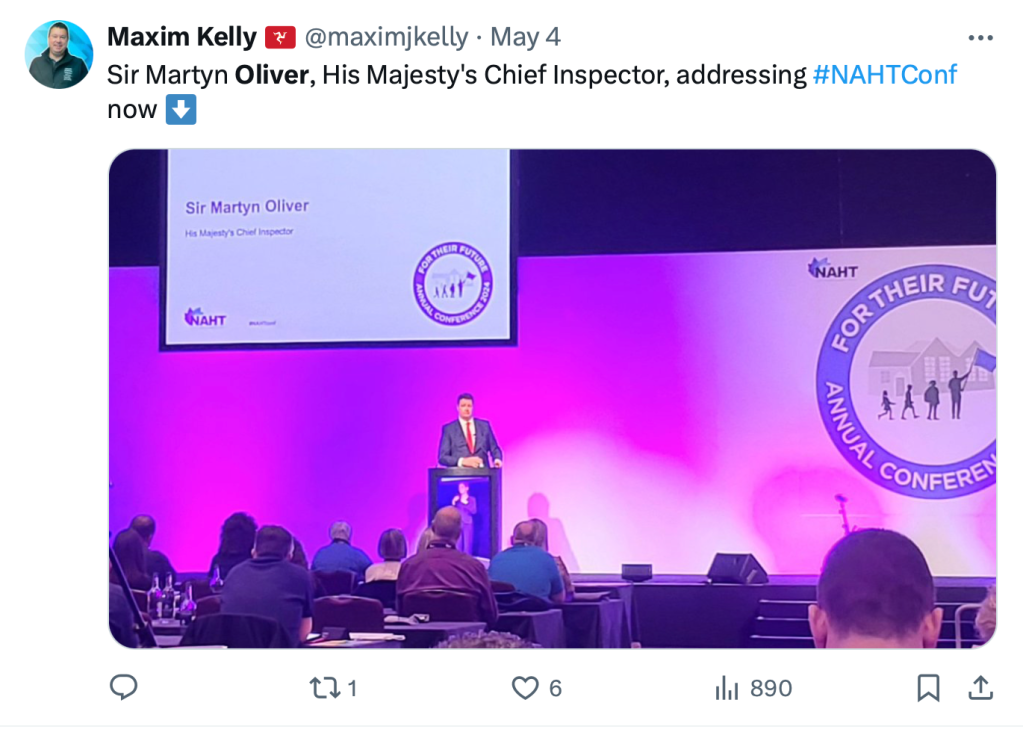
I always look forward to attending the NAHT National Conference in May. This year, in Newport, Wales, the conference delivered its usual mix of networking, professional conversation, and consensus about the current state of education across the British Isles. Inspection was a key theme. Sir Martyn Oliver, the newly appointed Chief Inspector, addressed the conference and spoke of changes he sought to bring and the “Big Listen” consultation he had instigated. However, the prevailing sentiment suggested that these measures lacked the depth required for meaningful reform. Disclaimer: I’m not in England, so I can only comment as an observer.
Ruth Perry’s tragic passing under the weight of an OFSTED inspection was poignantly remembered, highlighting the profound stress and challenges imposed by the current inspection regime. The call for significant reform of the OFSTED process was unanimous and urgent. This widespread concern underscored the necessity for a kinder, more supportive evaluation method—principles embodied in the Isle of Man’s external validation approach, which I have recently experienced, leading one of my schools through the process.
The Quality Assurance Model in the Isle of Man is based on ongoing school and educational service self-improvement. Its aim is to support schools and educational services in personal and organisational growth, ensuring the best outcomes for all children and young people while enabling schools and services to work together. Throughout this process, children’s development remains at the heart, along with staff development and school growth.
The Isle of Man Government’s Department of Education, Sport, and Culture has collaborated closely with school leaders to co-construct a Quality Assurance Framework. Whilst it is not perfect, it is a product of genuine consultation between schools and the Government, providing school leaders with an almost equal voice via a Task and Finish Group, which includes serving school leaders and teachers. This new model has been some years in the making, during which “inspections” were paused, allowing schools to focus on creating and implementing this system.
On-going Quality Assurance
Essentially, schools in the Isle of Man now engage in continuous self-assessment against an agreed quality assurance framework, complemented by peer reviews leading up to full “inspection”—external validations—that evaluate the accuracy of schools’ self-assessments. The goal is to foster school improvement without resorting to single-word judgments. Instead, we create a narrative that will contribute towards an annual thematic report on all Isle of Man schools. This report will guide our Government and the Department in strategic planning, such as allocating funds for further school improvement or recognising themes for whole-island training support and growth. It’s a system that moves away from naming (and shaming) individual school leaders, allowing schools to celebrate successes independently of inspection reports and address issues discreetly.
We’ve carefully considered the language we use. For example, rather than low “grades” of “requires improvement,” we say “growth priority.” Inspection will be referred to as “validation.” This process officially commenced in September following a two-year preparatory phase, so we’re very much in the early stages. Another notable aspect is the transparency in our external validation scheduling, with a published timetable for all schools. My first school was due for external validation earlier this month; knowing in advance removed all anxiety about when we might expect “the call.” Honestly, how does OFSTED expect to get the best out of people who are jumped on and bounced into an inspection from a position of fear and anxiety? I’m very peased we’ve moved on from this game in the Isle of Man.
External validation is just one part of the ongoing quality assurance systems used daily within our schools and services in the IOM. It supports schools and services to understand the validity of our own judgments by providing rigor, focus, informed challenge, and enabling reflection to plan for improvement.
Our Story
In November 2023, it was confirmed that one of my schools would be externally validated in May 2024. I was given a clear timeline outlining when I would need to submit an up-to-date Self-Evaluation commentary with supporting evidence, dates for a conversation with the external validation team to discuss their initial response, and an opportunity to co-construct validation trails—foci—for the external validation visit. All this was supported by a data-sharing agreement and ongoing conversations via a secure MS Teams channel, enabling a co-constructed external validation visit. The timeline also included a pre-external validation readiness call (video style over Teams) and a pre-visit meeting for the entire staff team with the lead external validator, which significantly reduced stress and anxiety among teachers.
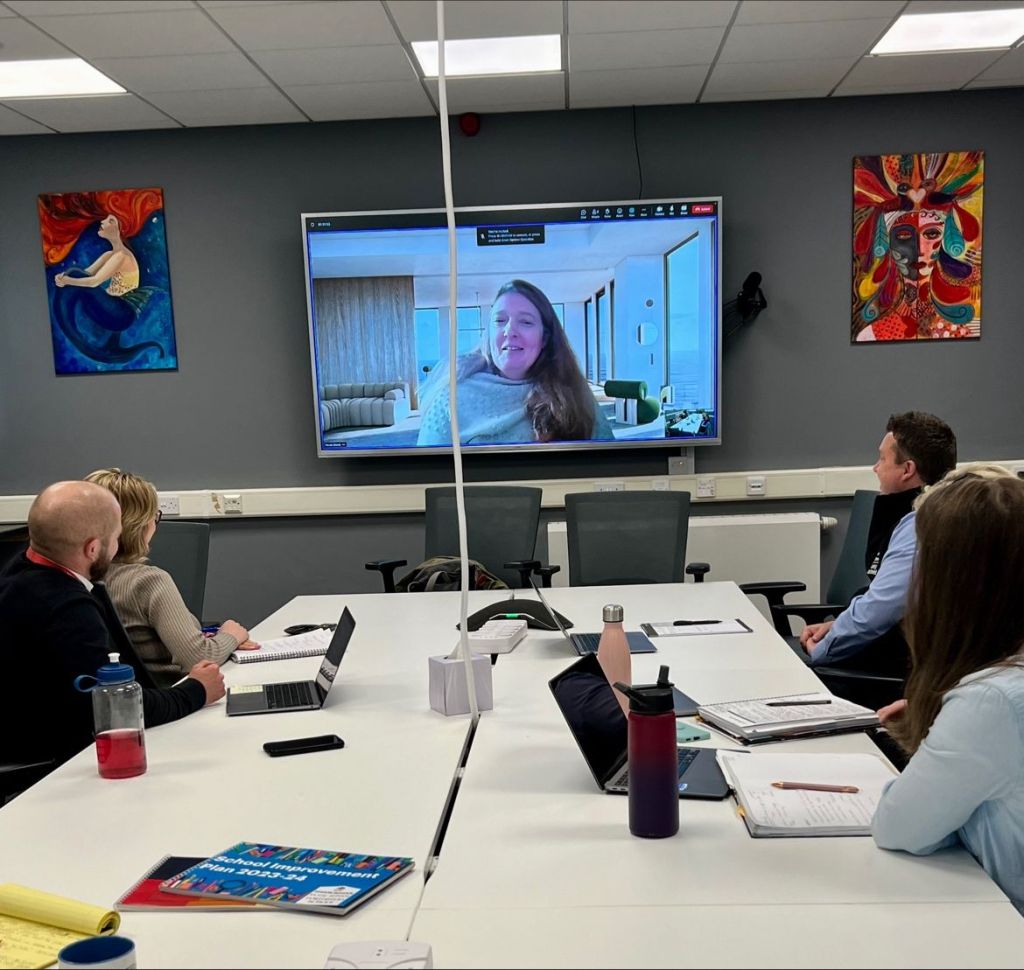
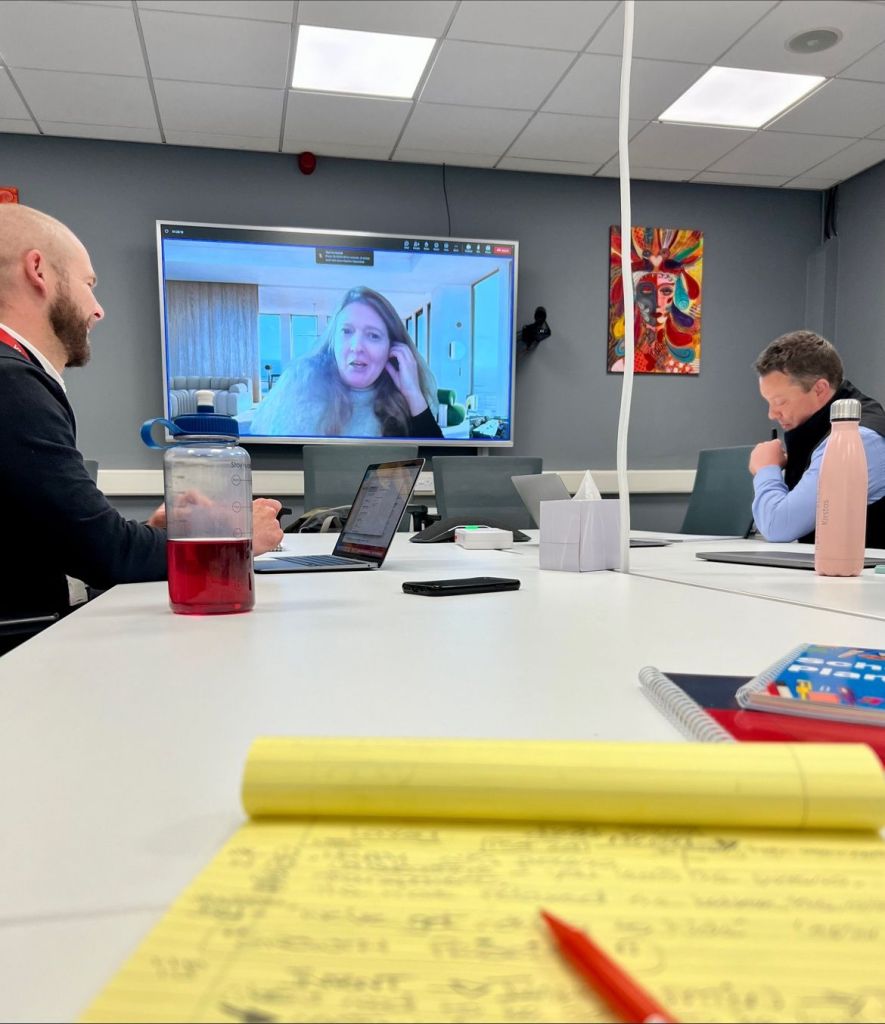
During the external validation, the team explored aspects across the following key areas: Quality of Education; Personal Development; Behaviour, Relationships, and Attitudes; and Leadership and Development. To gain a clear understanding of the school’s performance in these areas, the validation team talked to learners, met with staff, governors, and parents, looked at learners’ work, joined lessons, reviewed school data, and considered the school’s priorities. At every stage, I and/or members of my team were involved in co-creation, co-construction, conversation, and dialogue. The fact that the validation team had significant school leadership experience and, crucially, is fully qualified in high-level coaching was fundamental to the success of the approach.
Key Features of External Validation:
- Collaborative Process: External validators work alongside school staff, fostering an environment of mutual respect and shared goals.
- Focus on Improvement: The primary aim is to identify strengths and areas for growth, providing constructive reflection that schools can use to enhance their practices.
- Holistic Assessment: The evaluation considers various aspects of school life, including leadership, teaching quality, pupil welfare, and community engagement.
- Ongoing Support: Post-validation, schools receive ongoing support to implement recommendations and encourage progress.
Comparing External Validation to OFSTED
Approach and Philosophy:
- OFSTED: Often perceived as a high-stakes inspection focusing on accountability and compliance, which can create a culture of fear and stress among staff.
- External Validation: Emphasises collaboration and support, aiming to build capacity within schools. Validators are seen as partners in the improvement journey.
Impact on School Culture:
- OFSTED: The pressure of inspection can lead to a compliance-driven culture where schools prioritise meeting inspection criteria over meaningful long-term development.
- External Validation: Encourages a positive school culture where staff feel valued and supported. This collaborative approach fosters trust and openness, leading to genuine improvements.
Feedback and Follow-up:
- OFSTED: While feedback is provided, the emphasis is on the inspection outcome, which can overshadow the developmental aspect. Follow-up support is less structured.
- External Validation: Provides constructive, actionable reflection with a focus on growth. Follow-up support ensures that schools are not left to implement changes in isolation.
Stakeholder Involvement:
- OFSTED: Primarily focuses on the perspectives of inspectors, with less emphasis on the views of the broader school community.
- External Validation: Engages various stakeholders, including pupils, parents, and the community, ensuring a comprehensive understanding of the school’s context and impact. The emphasis of an external validation visit is not placed on the head… rather there is a view that everyone is a leader and should be involved.
As an Executive Headteacher, I have found the external validation process immensely beneficial for our schools. The collaborative nature of the process has allowed us to engage in open, honest discussions about our practices and areas for improvement. Validators have provided insightful reflection that has helped us refine our strategies and better meet the needs of our pupils.
As we continue to navigate the complexities of educational quality assurance, it’s clear to me that the approach taken by the Isle of Man offers valuable insights into creating a supportive and effective evaluation system. The collaborative nature of external validation, with its focus on continuous improvement and stakeholder involvement, appears to stand in stark contrast to the high-stakes pressure often associated with OFSTED inspections, and yet is just as robust, rigourous, and credible, if not more so. As educators, parents, and policymakers, we must ask ourselves: How can we further refine and expand these principles to ensure all schools foster environments where both pupils and staff can thrive? Let us continue to advocate for evaluation methods that prioritise growth, collaboration, and the well-being of our school communities. I hope that OFSTED is taking note.
 MANX MAX
Leave a comment